

Raccoon Removal in Houston, TX
Raccoons in Your Attic? Find Out How They're Getting In.
Raccoons can enter attics through damaged roof vents, soffits, rooflines, and other vulnerable openings. Our Houston raccoon removal service identifies the activity, locates entry points, removes or excludes the raccoon, and seals the structure to help prevent re-entry.
Raccoon Inspection
Identify activity, entry points, and signs of raccoons inside the home.
Removal & Exclusion
Remove or exclude raccoons using the appropriate method for the situation.
Entry-Point Sealing
Seal identified wildlife openings after removal to help prevent re-entry.
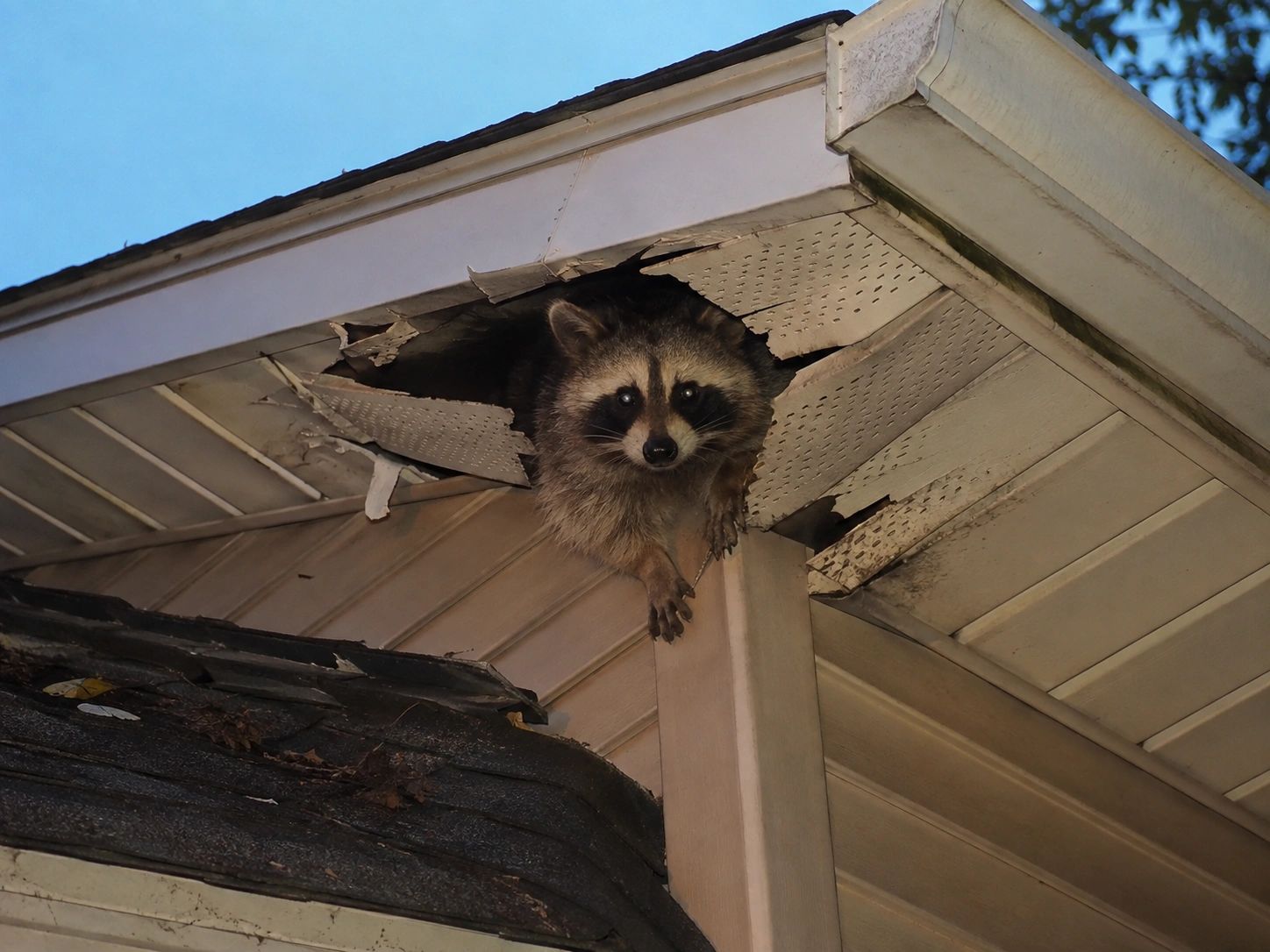
How Raccoons Get Into Your Attic
Raccoons can turn vulnerable areas of a home into entry points.
Raccoons are strong climbers and commonly access Houston attics through damaged roof vents, soffits, roof returns, fascia gaps, and weak areas along the roofline. Once they find a vulnerable opening, they can pull or tear at materials to gain access.
Roof Vents
Damaged or unsecured roof vents can give raccoons direct access into the attic.
Soffits & Roof Returns
Weak or damaged areas along the roofline are common raccoon entry points.
Fascia Gaps & Openings
Existing gaps or damaged materials can provide access into the structure.
The Real Problems Raccoons Can Leave Behind

Contamination
Nesting & Babies
Property Damage
Raccoon droppings and urine can contaminate attic insulation and leave behind bacteria, odors, and waste.
Property Damage
Nesting & Babies
Property Damage
Raccoons can tear insulation, damage ductwork, and pull apart vulnerable materials while moving through an attic.
Nesting & Babies
Nesting & Babies
Nesting & Babies
Mother raccoons commonly use attics as denning areas to give birth and raise their young.
Attic Damage
Nesting & Babies
Nesting & Babies
Repeated raccoon activity can leave insulation flattened, contaminated, and damaged throughout affected areas.